Turnitin Flags ChatGPT Style Text. Students & Educators, Know the Limits

Vitaly Gariev
Short answer: yes, to an extent. Turnitin can flag writing that matches patterns typical of ChatGPT style text, but that result is probabilistic, not proof. Turnitin cannot access ChatGPT accounts, prompts or chat history, so a flag means the text resembles AI output statistically, not that a student definitely used ChatGPT.
TL;DR:
- Turnitin’s AI detection measures patterns typical of GPT-style text but cannot confirm ChatGPT use or access chat histories or prompts.
- Detection accuracy drops significantly for hybrid or heavily edited work, especially in non-English languages, making flagged results indicative rather than definitive proof.
- The system is more reliable at identifying AI-generated content directly from models like GPT-3.5 and GPT-4, with less certainty on newer or alternative models.
- A sentence-level false positive rate around 4 percent means individual flagged sentences require manual review rather than automatic penalty decisions.
- Disclosing AI assistance, maintaining drafts, and designing assignments around process evidence remain the best strategies to prevent misclassification and promote academic integrity.
Table of Contents
- What Turnitin’s AI report actually measures
- How Turnitin’s detection actually works
- How reliable is Turnitin, really?
- What happens if your work gets flagged
- Does rewording AI text actually beat detection?
- Reducing risk without cutting corners
- Detection should open a conversation, not end one
- Where HumanizeAI fits if you’re revising AI-assisted drafts
- Sources
- FAQ
What Turnitin’s AI report actually measures
Turnitin’s AI writing detection sorts flagged text into two categories: content it classifies as “AI-generated only” and content it classifies as “AI-generated text that was AI-paraphrased,” meaning likely run through a paraphrasing tool or rewritten by another model after being drafted by AI. These categories come from Turnitin’s own guides, which walk through how the report highlights qualifying passages.
The AI percentage sits completely apart from the Similarity score. Similarity checks a paper against a database of indexed sources looking for matching text and citations. The AI score instead estimates how closely writing patterns, sentence structure and word choice resemble output from large language models. A student’s paper can carry a low similarity score and a high AI score, or the reverse, because the two measures answer different questions entirely.
A few practical limits matter here:
- The detector analyzes long-form prose sentences, not short answers, bullet points, code, tables or poetry.
- Scores below a low-confidence threshold are marked with an asterisk rather than a hard number, since Turnitin treats low-confidence detections cautiously.
- English-language detection includes AI-paraphrase recognition, while coverage in other languages currently lags behind, according to institutional guidance summarizing Turnitin’s rollout.
None of this tells an instructor that ChatGPT specifically was the tool used. It tells them the writing statistically resembles known AI-generated patterns.
How Turnitin’s detection actually works
Turnitin doesn’t fingerprint a specific chatbot. Instead, its model compares a submission’s writing characteristics, sentence rhythm, word predictability, structural patterns, against patterns it learned from large volumes of AI-generated text. When those characteristics cluster too closely to the learned patterns, the passage gets flagged as likely AI-written.
Turnitin’s public documentation states the underlying model was trained on content from GPT-3.5 and GPT-4, and the company has continued updating the system as newer models emerge. That training basis matters: a detector built around GPT-family outputs recognizes GPT-family stylistic fingerprints most reliably, and its accuracy on writing from other model families is less established.
Turnitin’s own guidance frames the tool as a starting point for review, not definitive proof of ChatGPT use, a distinction the company repeats across its documentation, according to Turnitin’s AI detection guidance.
Turnitin has also added detection aimed specifically at paraphrasing tools and “bypasser” services, programs built to rewrite AI text so it reads as more human. This capability targets text that started as AI output and was then run through a rewording tool, addressing common evasion attempts based on simple word swapping.
A few scope notes worth keeping in mind:
- Paraphrase and bypasser detection currently applies most reliably to English-language submissions.
- The detection model is updated periodically, so its accuracy on brand-new AI models can lag behind the models themselves.
- Turnitin separates “AI-generated” from “AI-generated text that was AI-paraphrased” as two distinct flags within the same report, according to Turnitin’s press materials on the paraphrasing detection feature.
How reliable is Turnitin, really?
Reliability depends on which number you look at. Turnitin reports document-level false positives under 1% for documents where at least 20% of the text is flagged as likely AI, alongside a sentence-level false positive rate of around 4%, according to Turnitin’s own guides. That gap matters: a single misflagged sentence in an otherwise human-written essay is far more likely than an entire misflagged document.
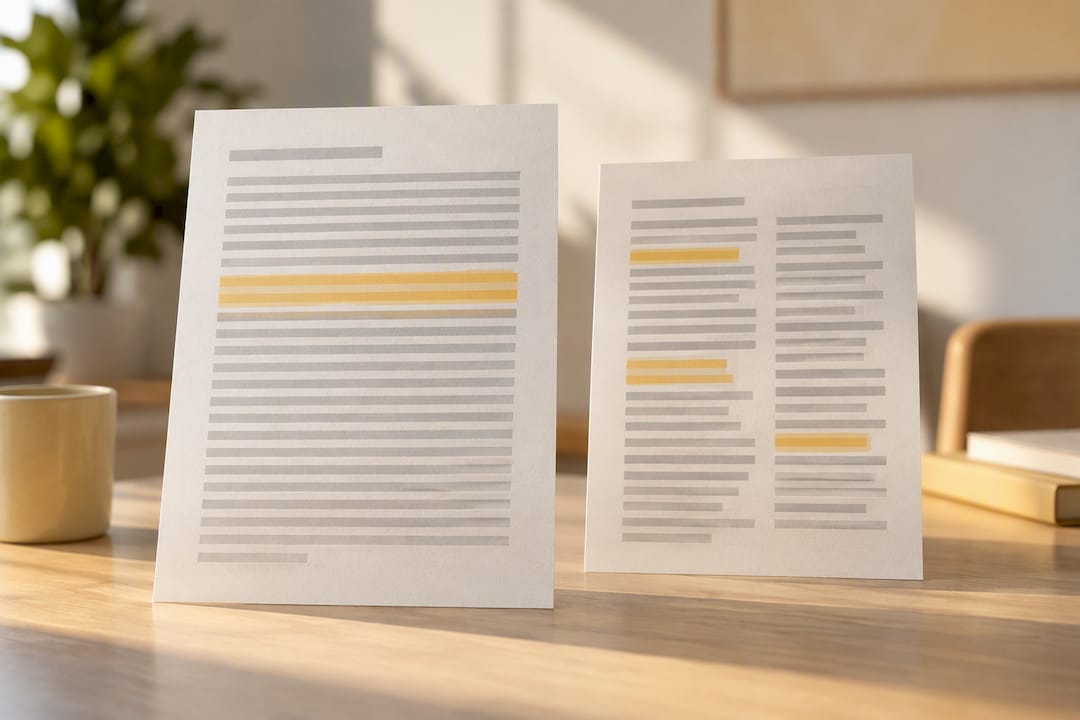
A peer-reviewed 2026 study evaluating Turnitin and Originality on 192 texts found both detectors performed poorly on hybrid human and AI writing, a finding that lines up with what many educators already suspect about mixed-authorship papers, according to the peer-reviewed evaluation published in 2026. The same research found Originality outperformed Turnitin on certain metrics, though neither tool handled hybrid text well, and both showed sensitivity to genre and language.
That weakness on hybrid text is the core reliability problem. When a student drafts a paragraph, runs it through ChatGPT for phrasing help, then edits the result by hand, the finished sentence carries traces of both human and machine authorship. Detectors trained to separate “human” from “AI” struggle with a blend that doesn’t cleanly belong to either category, which is part of why independent researchers commonly map detector outputs onto three tiers, Human, Hybrid and AI, rather than treating scores as a binary yes or no.
A few patterns show up consistently across the research:
- Sentence-level flags cluster around transitions and topic shifts in mixed documents, where writing style changes mid-paragraph.
- Recall on hybrid or heavily edited text drops noticeably compared to recall on unedited AI output.
- Detector accuracy varies by genre, meaning a lab report and a personal essay won’t necessarily get flagged with the same reliability.
None of this makes Turnitin useless. It means a flag is evidence worth investigating, not a verdict.
What happens if your work gets flagged
Turnitin designs its AI report to start a conversation, not to hand down an automatic penalty. The company’s own guidance is explicit that the score is one data point among several, and that the decision about academic misconduct sits with instructors and institutions under their own policies, according to institutional AI writing FAQs.pdf).
Here’s what a typical review process looks like:
- An instructor sees the AI percentage and highlighted passages in Turnitin’s report and reviews them manually rather than acting on the number alone.
- The instructor may ask the student for drafts, outline notes, research logs or other process evidence that shows how the work developed.
- Many institutions schedule a conversation with the student before drawing any conclusion, following whatever academic integrity policy applies on campus.
- A final decision, if any, follows the institution’s formal misconduct process rather than resting on the Turnitin score alone.
Students protect themselves by saving drafts at each stage, keeping research notes and citations, and disclosing any AI assistance the assignment permits. Educators strengthen their review by treating the AI score as a prompt for follow-up questions rather than as standalone proof, and by asking for the kind of process evidence a flagged score alone can’t provide.
Does rewording AI text actually beat detection?
Not reliably. Turnitin’s paraphrase detection was built specifically to catch text that started as AI output and was then run through a rewording tool, so simple synonym swapping or sentence reshuffling doesn’t erase the underlying statistical fingerprint the detector is trained to notice.
Independent evaluations back this up only partway. Paraphrasing can genuinely degrade some detectors’ performance, lowering confidence scores or pushing borderline text under a reporting threshold, but it doesn’t eliminate the risk, especially once the result becomes a hybrid of AI phrasing and human editing. That’s the same hybrid-text weakness that trips up detection in general: heavy rewording often produces exactly the blended human and machine style that’s hardest to classify cleanly, in either direction.
A few things worth knowing before relying on rewording:
- Word spinners and thesaurus-style rewriting tools tend to preserve the sentence structure patterns that detectors key on, even when individual words change.
- Detection models get updated periodically, so a bypass technique that works today isn’t guaranteed to work after the next model refresh, per Turnitin’s academic integrity guidance.
- The Rewritify bypass discussion covers this same paraphrase-detection tension in more detail for readers weighing rewording tools specifically.
Pro Tip: Treat any AI detection score as a signal to review your own process, not a hurdle to engineer around: the safer path is always disclosure within your assignment’s actual policy.
Reducing risk without cutting corners
Students and educators both have concrete, low-effort steps that lower the odds of an unfair flag or a genuine integrity problem slipping through unnoticed.
For students, the checklist is short:
- Read the assignment’s actual AI policy before starting, since permitted use varies widely by course and instructor.
- Keep dated, versioned drafts rather than a single final file, so your process is visible if questioned.
- Run a self-check on your own draft using a sentence-by-sentence AI checker before submission if you’re unsure how a passage reads.
- Disclose any AI assistance the assignment allows, in the format your instructor requests.
- Use AI tools for brainstorming or feedback rather than as a replacement for drafting whenever policy allows it.
For educators, a shorter set of habits helps:
- Treat the AI percentage as one data point, not a verdict, before raising the issue with a student.
- Ask for process evidence, drafts, notes, outlines, when a score seems worth investigating.
- Design assignments that surface process naturally, through staged submissions or reflection components.
| Practice | Who it’s for | Why it helps |
|---|---|---|
| Keep versioned drafts | Students | Shows genuine writing progression if a score is questioned |
| Read the course AI policy first | Students | Prevents accidental misuse of tools the assignment restricts |
| Treat AI score as one data point | Educators | Avoids penalizing on a probabilistic number alone |
| Request process evidence | Educators | Corroborates or clears a flagged submission fairly |
| Redesign toward staged submissions | Educators | Makes authorship visible without relying on detection alone |
Detection should open a conversation, not end one
No detector, including Turnitin, is perfect, and the sentence-level false positive numbers alone should give every instructor pause before treating a flag as a conclusion. I think the more useful mindset treats an AI score the way a smoke detector treats smoke: worth checking, never proof of fire.
Institutions that publish clear, specific AI policies and design assignments around visible process, drafts, reflections, research logs, put far less weight on any single detection number. That protects honest students from false flags and gives instructors something more solid than a percentage to act on. If your department is still writing its AI policy, that clarity is worth prioritizing before the detection technology itself.
— Mohammad
Where HumanizeAI fits if you’re revising AI-assisted drafts
If your assignment permits AI assistance for brainstorming, outlining or a first pass, the challenge often isn’t detection, it’s making that draft actually sound like your own writing. Humanizeai.co is built for exactly that editing step: our proprietary Jonas 2.0 model, trained on millions of authentic writing samples, rewrites stiff or repetitive AI phrasing into text with more natural flow and tone while keeping the original meaning intact.
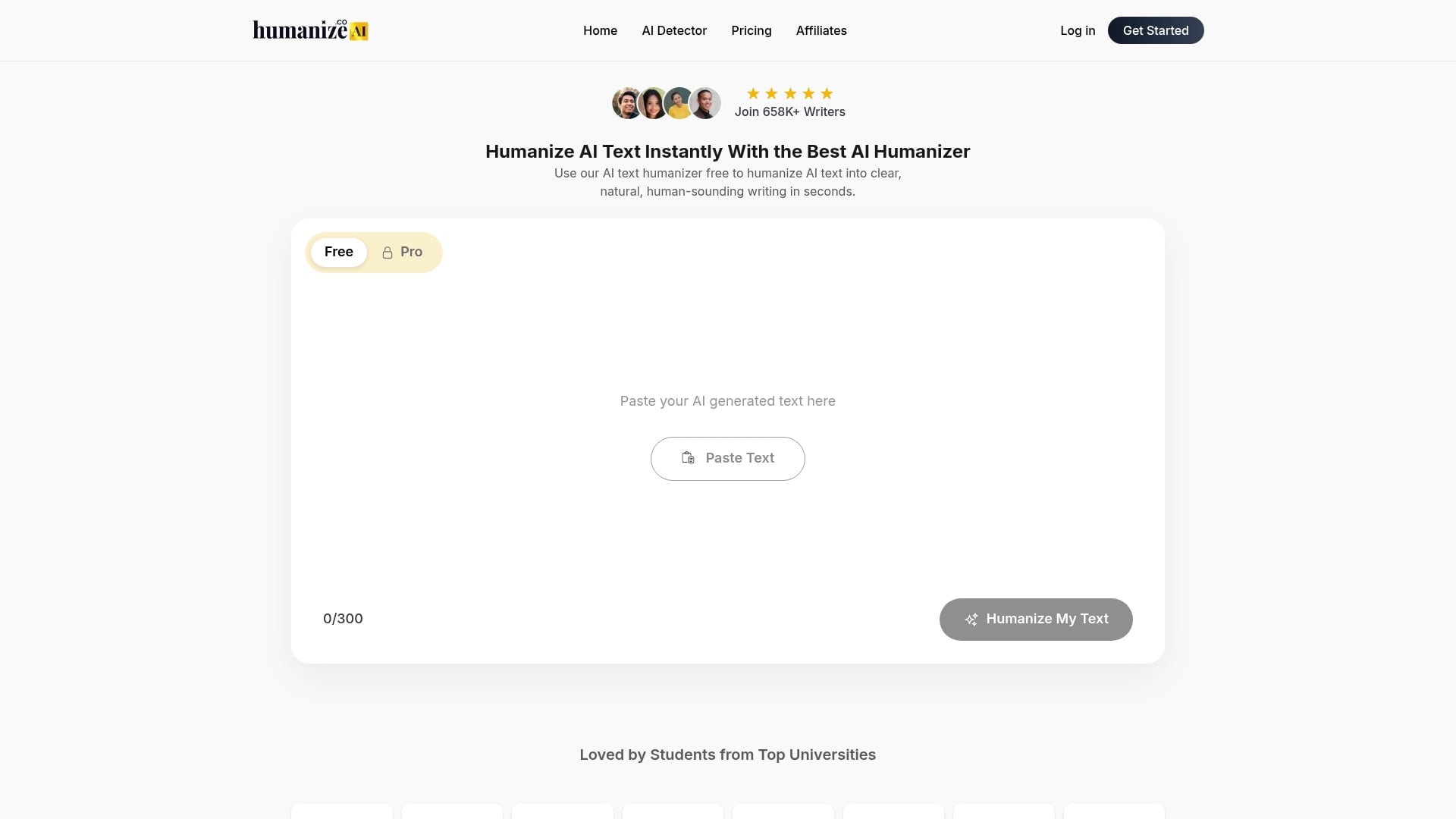
That’s useful for polishing a permitted AI draft before you add your own analysis and voice, not for hiding AI use where policy forbids it. Always follow your institution’s actual AI policy and disclose assistance when it’s required.
A few ways students and professionals use the platform:
- The Essay Humanizer focuses specifically on academic tone and clarity.
- The general AI Humanizer works across essays, reports and blog drafts.
- Plans include Basic, Pro, Unlimited, and a Free tier for lighter use, with current prices available on the Humanizeai site.
Try the editor on your next draft and see how it reads before you submit.
Sources
This article draws on Turnitin’s own documentation and product statements, alongside independent academic evaluation of detector accuracy, so readers can check the primary material directly.
- Using the AI Writing Report – Turnitin Guides
- Turnitin press: AI paraphrasing detection feature
- Peer-reviewed evaluation of AI detectors (2026)
- Turnitin AI Detection guidance (institutional PDF)
FAQ
Will my essay be flagged as AI if I use ChatGPT to write it?
It’s likely, though not certain. Turnitin’s detector is trained to recognize patterns from GPT-3.5 and GPT-4 style output, so text drafted directly by ChatGPT with little editing has a meaningfully higher chance of triggering the AI-generated flag than text you’ve substantially revised yourself.
Will Turnitin detect AI if I reword it?
Rewording alone isn’t a reliable way to avoid detection, since Turnitin specifically added paraphrase and bypasser detection to catch text that started as AI output and was later reworded.
Can professors tell if you use ChatGPT?
Turnitin’s report gives instructors a likelihood estimate and highlighted passages, but it doesn’t prove ChatGPT specifically was used, since it can’t access chat history or prompts. Instructors typically combine the score with process evidence like drafts or notes before drawing any conclusion.
How do I make sure ChatGPT is not detected?
There’s no reliable way to guarantee AI-written text escapes detection, and attempting to conceal AI use where it’s prohibited carries real academic risk. The safer approach is checking your assignment’s actual AI policy, disclosing any permitted assistance, and keeping drafts that document your own writing process.


Vitaly Gariev
Get updates in your inbox
.Subscribe to our emails to receive newsletters, product updates, and marketing communications.